
16 March, 2026

153 Views
Why Indian Clothes Dry Cleaning Requires Specialized Fabric Care
Traditional Indian garments are among the most intricate pieces handled in professional garment care. Sarees, lehengas, sherwanis, and embroidered salwar suits often combine delicate natural fabrics, layered construction, and handcrafted embellishments. Because of this complexity, Indian clothes require specialized dry cleaning techniques beyond standard garment care.
Unlike everyday garments, these fabrics react differently to water, heat, and mechanical agitation. Professional Indian Dress Dry Cleaning helps to protect these fabrics and retain their colour, shape, and craftsmanship.
Delicate Fabrics Used in Indian Garments
Many Indian outfits use delicate textiles that must be cleaned under carefully controlled conditions. Exposure to water, harsh detergents, or high heat can permanently damage these materials.
Common fabrics that require specialized Indian Clothes Dry Cleaning include:
• Pure silk and raw silk
• Chiffon and georgette
• Velvet and brocade
• Organza and net fabrics
• Handwoven cotton blends
Each fabric responds differently to cleaning methods and solvents. For example, silk can lose its sheen when exposed to alkaline detergents, while velvet can lose its pile texture if subjected to excessive pressure. Professional cleaners evaluate fabric behaviour before selecting the appropriate cleaning method.
Embellishments That Require Expert Handling
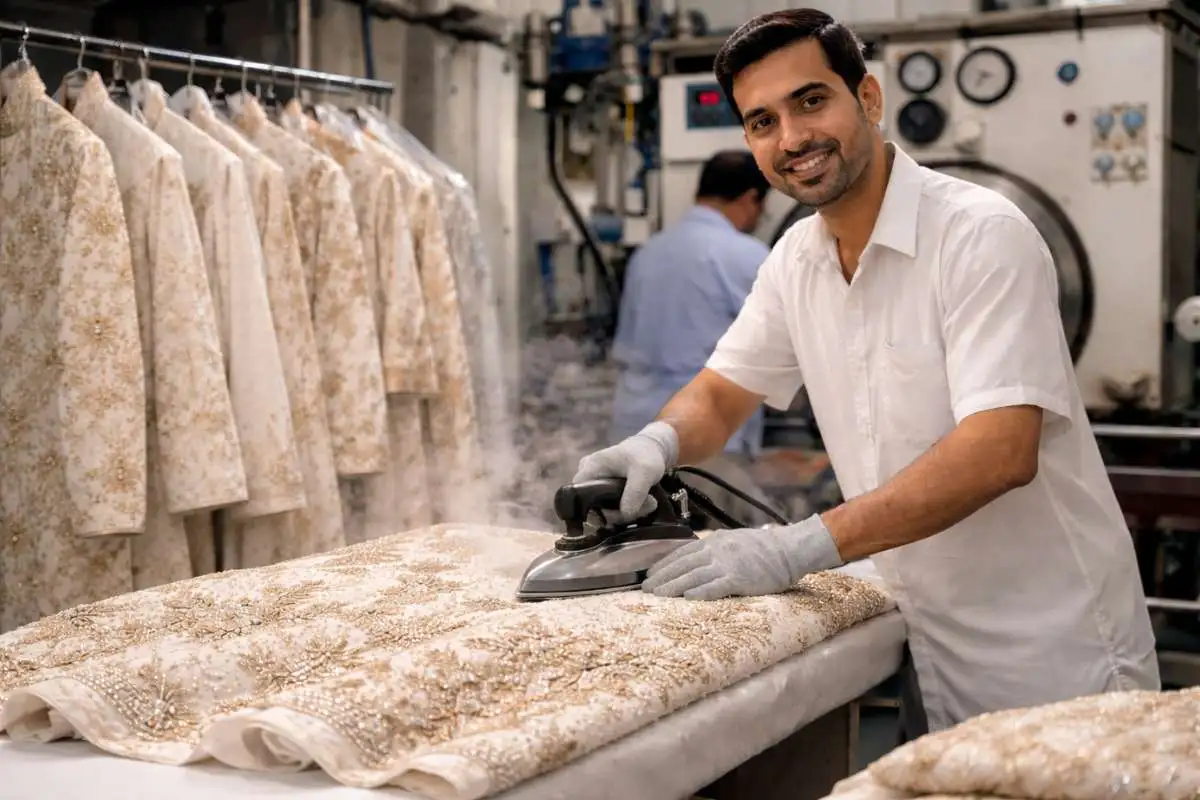
A defining feature of traditional Indian clothing is its decorative embellishments. Many Indian clothes have intricate embroidery, sequins, beads, mirror work, and zari threads with metallic fibres.
While these embellishments enhance the garment’s beauty, they also make it more vulnerable to damage from machine washing or aggressive cleaning.
Professional Indian dress dry cleaning uses specialized cleaning cycles that protect embellishments during the cleaning process.
Common Risks of Improper Cleaning
Traditional garments can suffer irreversible damage if they are cleaned using standard washing methods. The most common issues include:
• Colour bleeding from highly saturated dyes
• Shrinkage in natural fabrics such as silk
• Tarnishing of metallic zari embroidery
• Loose beads, sequins, or mirror work
• Fabric distortion or loss of garment structure
These risks are the primary reason why professional Indian Clothes Dry Cleaning is recommended instead of conventional laundering.
Why Dry Cleaning Solvents Are Safer for Indian Fabrics
Despite the name, dry cleaning does not mean garments are cleaned without liquid. Instead, garments are cleaned using a solvent rather than water. These solvents dissolve oils, makeup, and food stains without saturating fabrics the way water does.
For delicate fabrics, this technique has several benefits. It reduces fibre swelling, prevents dye migration, and inhibits shrinkage. In professional Indian Dress Dry Cleaning, solvents are used to effectively remove impurities without compromising delicate fabrics or embroidery.
Professional Inspection Before Cleaning
Expert cleaners do not simply insert garments into a cleaning machine. Instead, each garment is carefully inspected before cleaning begins.
A typical professional cleaning process includes:
• Garment inspection
• Dye stability and fabric tests
• Targeted stain pre-treatment
• Controlled solvent-based cleaning
• Hand finishing and precise pressing
This process ensures every garment is treated according to its fabric and construction.
Removing Complex Stains from Indian Clothing
Indian clothing is also worn during weddings, festivals, and other religious events where food oils, cosmetics, perfumes, and henna stains may be present. Some of the most difficult stains include turmeric, cooking oils, cosmetics, and perfume residues.
Professional Indian Clothes Dry Cleaning involves identifying stains and applying specialized cleaning agents to remove them without damaging the fabric.
Preserving Garments for Long-Term Storage
Many Indian garments are worn occasionally and stored for long periods. If stored without proper cleaning, invisible residues such as sweat, perfume, or food oils can oxidize and permanently discolour the fabric.
After professional Indian Dress Dry Cleaning, experts recommend proper storage practices such as:
• Using breathable muslin or cotton garment bags
• Avoiding plastic covers that trap moisture
• Storing garments in cool, dry environments
• Refolding sarees periodically to prevent crease stress
These practices help preserve garments and reduce long-term fabric damage.
Protecting Cultural and Heirloom Garments
Traditional Indian clothing often holds cultural and emotional significance. Wedding sarees, heirloom sherwanis, and ceremonial outfits are frequently passed down through generations. Proper cleaning and preservation help keep these garments wearable while protecting their structure and craftsmanship.
Professional Indian Clothes Dry Cleaning helps protect the craftsmanship, embroidery, and fabric integrity of garments that represent cultural heritage and personal memories.
Final Thoughts
Traditional Indian garments combine delicate fabrics, vibrant dyes, and intricate craftsmanship that require careful handling. Standard cleaning methods can easily damage these materials, making specialized care essential.
Professional Indian Dress Dry Cleaning protects delicate fibres, preserves embellishments, and extends the life of valuable garments. By choosing expert Indian Clothes Dry Cleaning, you ensure that treasured outfits remain vibrant, elegant, and ready for future celebrations.
 0 Responses