

Eco-Friendly Dry Cleaning for Delicate Indian Fabrics in Mississauga

If you own a hand-embroidered lehenga, a Kanjeevaram silk saree, or a heavily beaded sherwani, you already know that regular laundry — or the wrong dry cleaner — can ruin it in a single wash. In Mississauga’s large and growing South Asian community, serving families across Mississauga, Oakville, and Brampton, families are looking for a dry cleaner who understands the difference between a cotton kurta and a Zari-embroidered bridal dupatta. That’s the gap Dry Cleaning Pros fills, offering eco-friendly dry cleaning Mississauga services and Indian garment cleaning Mississauga families can trust, built around the real needs of Indian and South Asian wardrobes

What Makes This Different

Eco-friendly dry cleaning for delicate fabrics uses low-toxicity, biodegradable solvents combined with hand-finishing techniques, rather than the bulk, high-heat processing designed for everyday suits and shirts. It’s slower and more manual, but it’s built for garments that can shrink, bleed, or lose embellishments under standard treatment.

That distinction matters enormously for Indian formal wear. A single lehenga can combine silk, net, tissue fabric, Zari thread, sequins, and glue-set stones — each reacting differently to heat, moisture, and chemicals. A saree’s Zari border can tarnish under the wrong solvent; a sherwani’s structured lining can warp under incorrect pressing. For Mississauga families, these pieces—including garments requiring bridal saree dry cleaning—aren’t occasional-use items. They’re worn at weddings, Diwali, Vaisakhi, and temple functions throughout the year, which keeps demand for genuinely qualified cleaning steady rather than seasonal.

The Professional Process

A proper cleaning starts with an intake inspection, where the garment is checked for existing damage or loose beadwork before anything else happens. The fabric is identified, a small area is tested for colour bleed, and stains like turmeric, oil, or mehndi are individually pre-treated before the main cleaning cycle to improve the chances of successful stain removal. Cleaning itself uses gentle, eco-friendly solvents such as Green Earth® rather than harsh traditional perc, and embellishments are hand-checked and reset afterward. Low-heat steam restores shape without flattening embroidery or velvet pile, a second inspection confirms the result, and the garment is packaged in acid-free tissue to prevent yellowing before it’s returned to you.

Pricing follows the same logic: fabric delicacy, embellishment level, garment size, and stain severity all factor in, and rush requests before an event typically carry a premium. A written estimate before drop-off is always worth asking for.

Why Mississauga’s Climate Plays a Role

Local conditions add a few practical wrinkles. Humid summers can leave stored silk or velvet with a mildew smell if it wasn’t fully dried before packaging. Cold, salty winters mean guests often arrive at events with slush on hems, which calls for extra attention to lower garments after the fact. Combined with Mississauga’s busy spring and fall wedding seasons, this creates predictable demand across neighbourhoods like Erin Mills, Port Credit, and areas near Square One.

A Few Things Worth Knowing

Bring stained garments in within 48–72 hours — turmeric and oil become far harder to remove once set. It’s worth asking any cleaner directly whether they hand-test embellishments before cleaning, since that step is often skipped by generalist shops. At home, store silk and velvet flat or on padded hangers rather than in tight plastic bags, which trap moisture and yellow fabric over time.

It’s also a common misconception that eco-friendly cleaning is somehow weaker on stains. In practice, the solvent is gentler, not less effective — the difference is made up through proper pre-treatment, not harsher chemicals.

The Bottom Line

Delicate Indian fabrics deserve more than a generic dry cleaning cycle — they need fabric testing, hand-finishing, and cleaners who understand what turmeric, mehndi, and Zari thread actually require. For Mississauga’s South Asian community, that’s not a luxury; it’s how these garments survive to be worn again.

Ready to have your bridal wear or festival outfit properly cared for? Visit Dry Cleaning Pros in Mississauga or contact our team by phone to learn more about our eco-friendly dry cleaning services. We’re also open on Saturdays and Sundays for your convenience.

Looking for professional Indian Dress Dry Cleaning and bridal saree dry cleaning in Mississauga? Visit Dry Cleaning Pros to have your garments professionally cleaned and cared for. We’re open seven days a week, including Saturdays and Sundays, to make drop-offs more convenient.

Frequently Asked Questions

Can silk sarees be dry cleaned safely? Yes, when a colour-fastness test is done first, and a gentle, low-heat process is used.

How do I remove turmeric stains from a lehenga? Bring it in within a few days. Turmeric stains are best treated promptly for higher success rates, as they become more difficult to remove once they set.

How much does it cost to clean a lehenga in Mississauga? It varies by embellishment level and size, so a specialist quote is more reliable than a flat estimate.

How should I store a lehenga after cleaning? Flat or on a padded hanger, wrapped in acid-free tissue, away from sunlight and humidity.
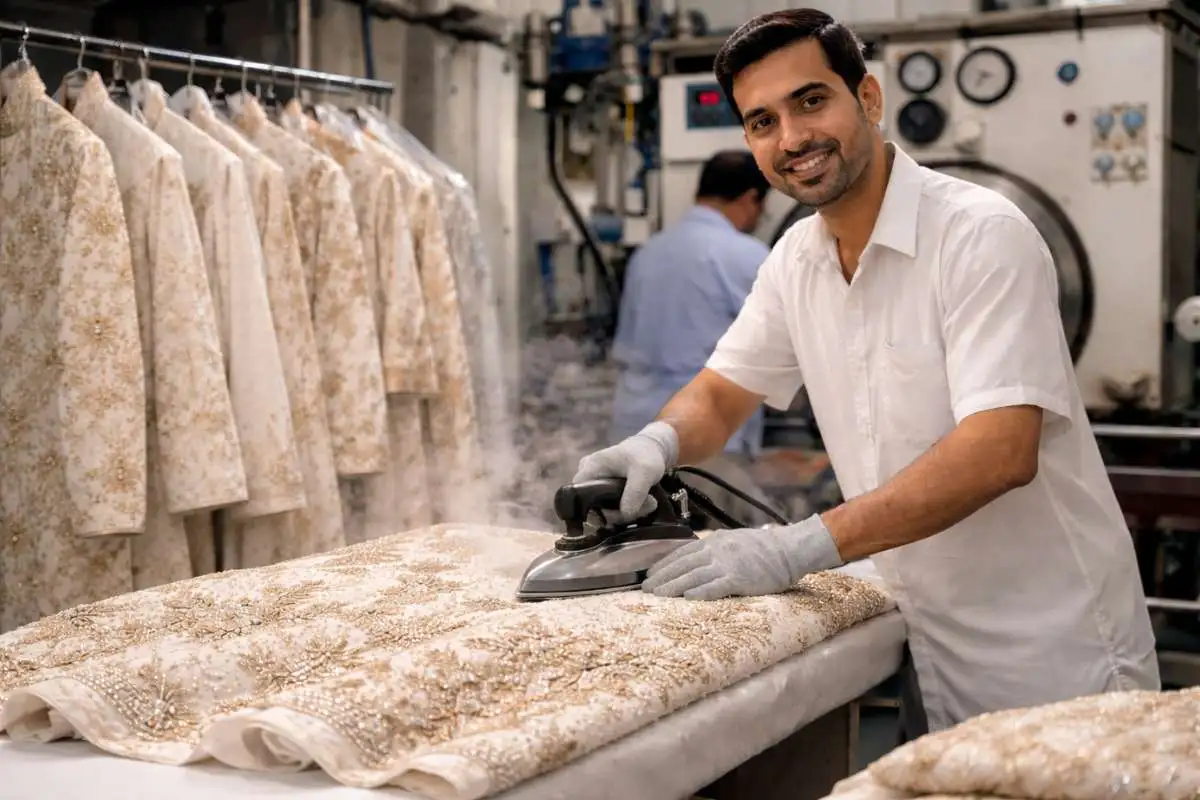
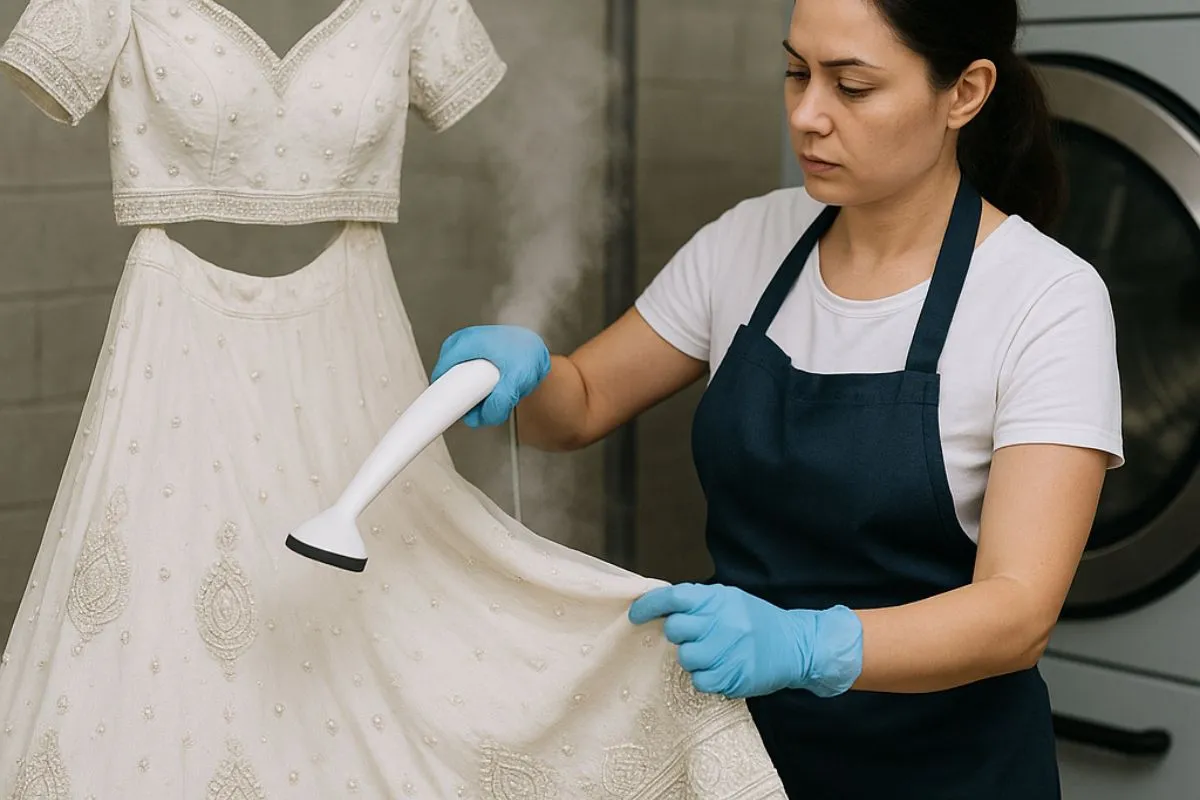
Why Indian Clothes Dry Cleaning Requires Specialized Fabric Care

Traditional Indian garments are among the most intricate pieces handled in professional garment care. Sarees, lehengas, sherwanis, and embroidered salwar suits often combine delicate natural fabrics, layered construction, and handcrafted embellishments. Because of this complexity, Indian clothes require specialized dry cleaning techniques beyond standard garment care.

Unlike everyday garments, these fabrics react differently to water, heat, and mechanical agitation. Professional Indian Dress Dry Cleaning helps to protect these fabrics and retain their colour, shape, and craftsmanship.

Delicate Fabrics Used in Indian Garments

Many Indian outfits use delicate textiles that must be cleaned under carefully controlled conditions. Exposure to water, harsh detergents, or high heat can permanently damage these materials.
Common fabrics that require specialized Indian Clothes Dry Cleaning include:

• Pure silk and raw silk

• Chiffon and georgette

• Velvet and brocade

• Organza and net fabrics

• Handwoven cotton blends

Each fabric responds differently to cleaning methods and solvents. For example, silk can lose its sheen when exposed to alkaline detergents, while velvet can lose its pile texture if subjected to excessive pressure. Professional cleaners evaluate fabric behaviour before selecting the appropriate cleaning method.

Embellishments That Require Expert Handling

A defining feature of traditional Indian clothing is its decorative embellishments. Many Indian clothes have intricate embroidery, sequins, beads, mirror work, and zari threads with metallic fibres.

While these embellishments enhance the garment’s beauty, they also make it more vulnerable to damage from machine washing or aggressive cleaning.

Professional Indian dress dry cleaning uses specialized cleaning cycles that protect embellishments during the cleaning process.

Common Risks of Improper Cleaning

Traditional garments can suffer irreversible damage if they are cleaned using standard washing methods. The most common issues include:

• Colour bleeding from highly saturated dyes

• Shrinkage in natural fabrics such as silk

• Tarnishing of metallic zari embroidery

• Loose beads, sequins, or mirror work

• Fabric distortion or loss of garment structure

These risks are the primary reason why professional Indian Clothes Dry Cleaning is recommended instead of conventional laundering.

Why Dry Cleaning Solvents Are Safer for Indian Fabrics

Despite the name, dry cleaning does not mean garments are cleaned without liquid. Instead, garments are cleaned using a solvent rather than water. These solvents dissolve oils, makeup, and food stains without saturating fabrics the way water does.

For delicate fabrics, this technique has several benefits. It reduces fibre swelling, prevents dye migration, and inhibits shrinkage. In professional Indian Dress Dry Cleaning, solvents are used to effectively remove impurities without compromising delicate fabrics or embroidery.

Professional Inspection Before Cleaning

Expert cleaners do not simply insert garments into a cleaning machine. Instead, each garment is carefully inspected before cleaning begins.

A typical professional cleaning process includes:

• Garment inspection

• Dye stability and fabric tests

• Targeted stain pre-treatment

• Controlled solvent-based cleaning

• Hand finishing and precise pressing

This process ensures every garment is treated according to its fabric and construction.

Removing Complex Stains from Indian Clothing

Indian clothing is also worn during weddings, festivals, and other religious events where food oils, cosmetics, perfumes, and henna stains may be present. Some of the most difficult stains include turmeric, cooking oils, cosmetics, and perfume residues.

Professional Indian Clothes Dry Cleaning involves identifying stains and applying specialized cleaning agents to remove them without damaging the fabric.

Preserving Garments for Long-Term Storage

Many Indian garments are worn occasionally and stored for long periods. If stored without proper cleaning, invisible residues such as sweat, perfume, or food oils can oxidize and permanently discolour the fabric.

After professional Indian Dress Dry Cleaning, experts recommend proper storage practices such as:

• Using breathable muslin or cotton garment bags

• Avoiding plastic covers that trap moisture

• Storing garments in cool, dry environments

• Refolding sarees periodically to prevent crease stress

These practices help preserve garments and reduce long-term fabric damage.

Protecting Cultural and Heirloom Garments

Traditional Indian clothing often holds cultural and emotional significance. Wedding sarees, heirloom sherwanis, and ceremonial outfits are frequently passed down through generations. Proper cleaning and preservation help keep these garments wearable while protecting their structure and craftsmanship.

Professional Indian Clothes Dry Cleaning helps protect the craftsmanship, embroidery, and fabric integrity of garments that represent cultural heritage and personal memories.

Final Thoughts

Traditional Indian garments combine delicate fabrics, vibrant dyes, and intricate craftsmanship that require careful handling. Standard cleaning methods can easily damage these materials, making specialized care essential.

Professional Indian Dress Dry Cleaning protects delicate fibres, preserves embellishments, and extends the life of valuable garments. By choosing expert Indian Clothes Dry Cleaning, you ensure that treasured outfits remain vibrant, elegant, and ready for future celebrations.

Tips for Preserving Heavy Lehenga After Dry Cleaning

Why Lehenga Care Is Important?

Proper care after professional dry cleaning keeps your heavy lehenga’s colour, embroidery, and shape intact, ensuring it stays beautiful for years.

A heavy lehenga is not just a garment – it’s a memory. Whether your wedding lehenga is a designer outfit or an heirloom, making sure it gets proper care ensures it remains as gorgeous as the day you wore it. Once you get professional dry cleaning, the care steps you take at home are important in ensuring its colour, shape, and embroidery remain intact.

1. Store in a Breathable Garment Bag

Plastic bags trap moisture, and this causes mildew and yellowing. Do not use them. Use a muslin or a cotton garment bag instead. These fabrics are breathable and prevent dust from settling on the lehenga while ensuring air circulation, preventing odour and damage to the fabric.

2. Avoid Direct Sun Exposure

Direct sunlight can bleach out bright colours and cause fine embroidery to become brittle with age. Store it in a cool, dark cupboard. If storage space is a problem, at least cover the lehenga in a cotton sheet before storing.

3. Fold Heavy Dupattas Flat

If your lehenga has a highly ornate dupatta, refrain from draping it since it will stretch or warp. Place it flat inside the garment bag or roll it inside acid-free tissue paper to safeguard its embroidery and zari work.

4. Utilize Acid-Free Tissue Paper

Put tissue paper in between the folds so that deep creases and colour transfer don’t occur. This little step can make a big difference in keeping the fabric fresh-looking, particularly if the lehenga has several different colours or panels.

5. Air It Out Regularly

Alternate between washing your lehenga every 6–8 months and exposing it for a few hours in a ventilated, shaded area. This keeps musty odours away and maintains the freshness of the fabric even if it has not been worn for years.

6. Clean Hands while Handling

Wash and dry your hands first before handling your lehenga. Skin oils or lotions can stain loose fabrics or cause stains in the long term.

7. Avoid DIY Perfume Sprays

Though the temptation to spray perfume directly on the lehenga is great, perfume contains alcohol that can stain and colour the fabric. Rather, place a sachet of lavender or cedarwood inside the bag for a nice fragrance.

Your lehenga is an investment that lasts long — by going that extra mile after professional cleaning, you will ensure its beauty lasts for years. If you are based in Mississauga and desire expert care, rely on Dry Cleaning Pros for Indian Dress Dry Cleaning that pays your precious garments the respect they deserve.